.jpg)
Notes
Notes on the music
Short notes on the music behind the band. Each is a placeholder for a longer piece.
For review:Which of these would Kelvin and Rachel want to write or edit themselves? Every piece here is agent-drafted from the sources listed under it.
What a session is
A session is a social gathering built around tunes. People who know the same tunes sit in a circle, usually in a pub, and play them together. Irish sources describe sessions as mostly for the musicians' own enjoyment, which is why listening first matters.
The plain manners, and the time and place of the Scottish session in Knoxville, are on the sessions page.
Reels, jigs and strathspeys
Scottish dance tunes come in a few forms. Reels, strathspeys and hornpipes are written in 2/2 or 4/4 time. Jigs are in 6/8, and slip jigs in 9/8. Marches are a further group.
In Cape Breton, foot tapping is heel only on strathspeys and heel and toe on reels.
Sources for this text
For review:Not used, because only general knowledge supports it and nothing was checked: that a strathspey is slower and more strongly accented than a reel, often with a dotted "snap", and that slow airs are lyrical pieces for listening. Kelvin and Rachel could supply these in their own words.
Cape Breton fiddling
Cape Breton fiddling came to Nova Scotia with Gaelic-speaking settlers from the Scottish Highlands and Hebrides, many of whom left during the Highland Clearances. The style is strongly rhythmic and closely tied to dancing. Its ornaments are borrowed from bagpipe playing, and its bowing and phrasing follow Gaelic speech and mouth music.
It is often said that the island kept older Scottish playing that changed in Scotland itself. This is hard to prove. Piano accompaniment is now usual where a pump organ was once more common.
Sources for this text
For review:The "older playing" idea is marked as needing a citation on Wikipedia. The Celtic Colours festival and the Gaelic College at St. Ann's were seen only in search summaries, so they are not mentioned.
Southern Appalachia
Old-time music of the Southern Appalachians draws on fiddle tunes and ballads brought by settlers from England, Lowland Scotland and Ulster in the 1600s and 1700s. The familiar story that it is mainly Scots-Irish is contested. Early collectors such as Cecil Sharp went looking for British ballads and gave less attention to other music.
Later scholars point to the African and African American origins of the banjo, to African influence on all the regional styles, and to German and other European influences. The result was a blend of several traditions, with Scottish and Irish tunes as one strand.
Sources for this text
For review:The sources that argue strongly for a Scots-Irish origin are tourism and advocacy sites, so they show the story is popular and not that it is settled. The Wikipedia article on old-time music is flagged as needing more citations.
Niel Gow and the old tune books
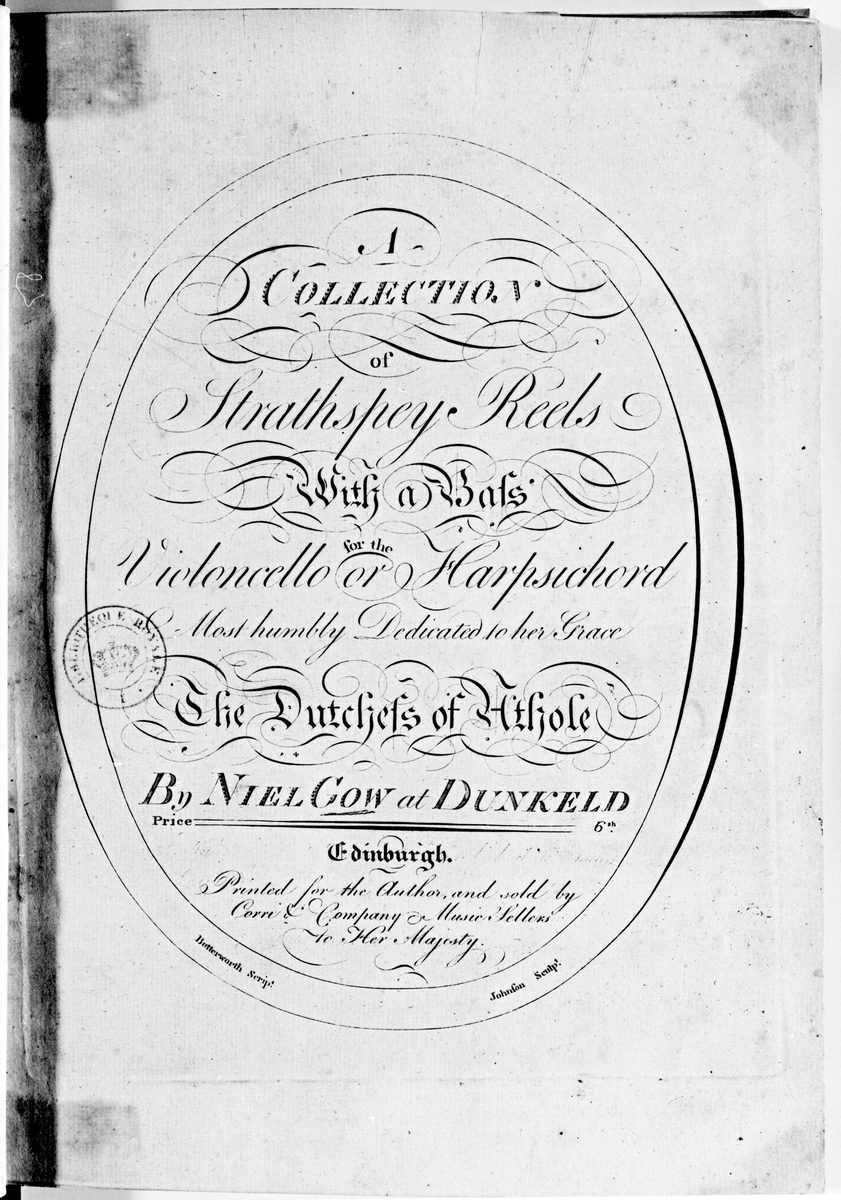
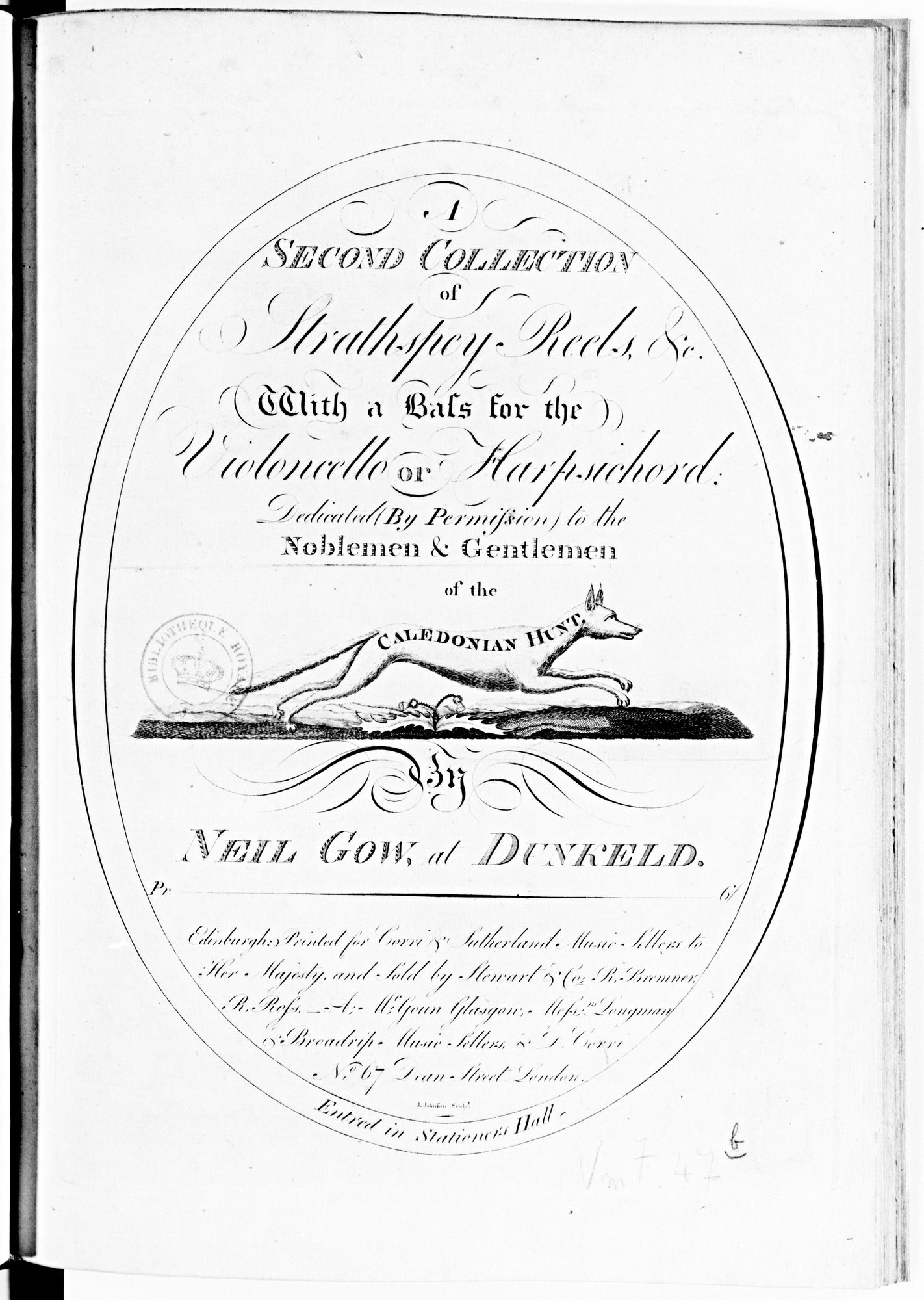
Niel Gow was born in 1727 at Strathbraan in Perthshire and died in 1807. His patron was the second Duke of Atholl. His collections of strathspey reels were first published in 1784, with further collections in 1788 and 1792, and his son Nathaniel continued the publishing.
James Scott Skinner (1843 to 1927) published more than six hundred of his own compositions and was first recorded in 1899. Scans of printed collections by both men can be read free online. The title pages shown here are from Niel Gow's first and second collections.
Sources for this text
For review:The scans are Public Domain-tagged files on Wikimedia Commons from the Bibliotheque nationale de France. The tag is the uploader's assertion for a print of about 1784 to 1788. Two dates are unresolved and left out: Skinner's "The Harp and Claymore" (1903 or 1904), and any date for "The Scottish Violinist".
.jpg)
.jpg)
Finding a fiddle
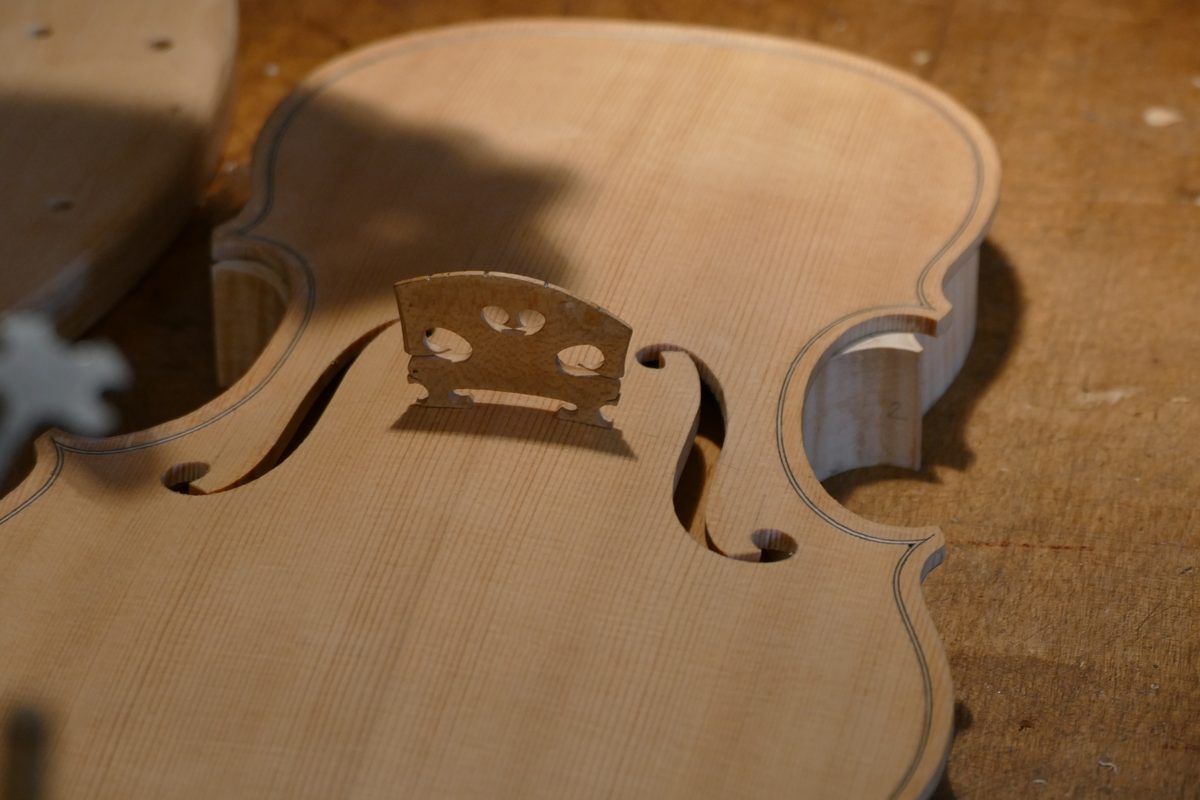
Kelvin Scott makes violins, violas and cellos in Knoxville. His website, Kelvin Scott Violins, describes his work and has a page for getting in touch. The Knoxville Scottish Music Session site also lists his shop on its links page.
Sources for this text
For review:Kelvin, what, if anything, do you want said here? Care taken: his own site lists making, commissions, trial of instruments, tuition and apprenticeships, and no repair or rentals. A third-party directory lists repair and restoration, which his own site does not, so neither is claimed. No prices.